



Mariela de la Guardia Oteiza Assumes the Presidency of AmCham Panama for 2026
27/02/2026
Leaders League 2026 Recognizes Icaza González-Ruiz Alemán in Litigation & ADR
05/03/2026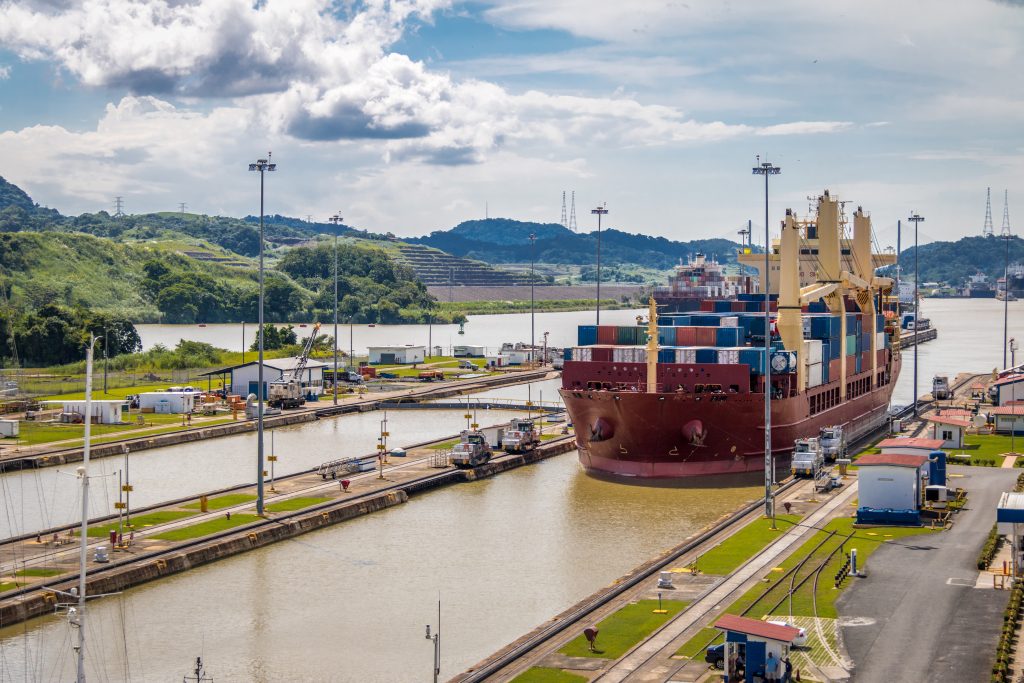
Why the ACP’s autonomy is the real safeguard for foreign investors

The new investment plan of up to US$8.5 billion in the Panama Canal opens opportunities in ports, energy, and water infrastructure. However, for foreign capital, the true differentiator does not lie in the amount of spending or the magnitude of the works, but in the institutional safeguards that support the project: the constitutional autonomy of the Panama Canal Authority (ACP), its special contracting regime, and the Canal’s permanent neutrality constitute the genuine guarantee of confidence in this new expansion cycle.
This is the view of Alexis V. Herrera Ríos, partner at Icaza, González-Ruiz & Alemán, who identifies the ACP’s constitutional governance as the main factor explaining investor interest in projects linked to the interoceanic waterway.
In this context is the strategy presented by the entity’s president, Ricaurte Vásquez, during the Eurolatino Economy Forum organized by EditoRed in December 2025. The program has been described as the second major expansion after the one inaugurated in 2016 and includes port infrastructure, water management, and complementary services.
The Canal thus seeks to consolidate itself as a global hub for container and energy product transport, supported by an expansion that combines strategic infrastructure with a stable legal environment.
Radar de riesgos para la inversión en América Latina: ¿Qué reformas legales y escenarios de incertidumbre política se esperan en 2026?
Why is the ACP’s autonomy the main institutional anchor?
At the institutional level, the attorney highlights the ACP’s constitutional autonomy, whose directors have nine‑year terms and a dedicated budget that cannot be modified by the Executive. According to the expert, its contracting policies and sustainability approach offer predictability to investors.
Operationally, the ACP works like a Swiss watch: efficiency, complementary maritime services, and digitalization that reduce time and risks.
Logistically, the attorney notes, the country aligns ports, free zones, and land connectivity to capture value beyond tolls, while the banking center and PPP schemes facilitate structured financing.
América Latina en 2026: Los cambios laborales y fiscales que redefinen el cumplimiento empresarial
Legal keys for investing in Panama: concessions, arbitration, and property rights
According to Herrera’s analysis, there are three pillars of the legal framework that an investor must consider when evaluating investment in Panama:
- Public nature and special regime of the ACP: the constitutional autonomy of the Canal Authority guarantees an independent contracting framework, with special rules for bidding and accountability processes that offer predictability and speed up project completion.
- Real rights and concession schemes: it is essential to evaluate the stability of property titles and long‑term contracts, considering critical aspects such as land use, the scope of easements, and environmental permits in protected areas.
- Dispute resolution and enforcement systems: investor confidence relies on clear mechanisms such as arbitration clauses, competent jurisdiction, precautionary measures, and the legal framework for enforcing guarantees.
“To this are added competition rules, compliance, anti‑corruption regulations, and tax and customs frameworks, such as the country’s territorial tax system and the rules applicable to special economic zones and logistics operations,” the attorney highlights.
How Does Panama’s Removal from the EU Grey List Impact the Financial System and Investment?
Strategic Projects: Ports, Pipeline, and Water Infrastructure Expansion
The new cycle of expansion of the Panama Canal—through which nearly 5% of global maritime trade transits—includes the construction of water infrastructure works and two additional ports: Corozal on the Pacific side and Telfers on the Atlantic. These projects involve an estimated investment of US$2.6 billion, with operations projected to begin around 2029. According to the Panama Canal Authority, the goal is to increase annual container capacity from 9.5 million to nearly 15 million.
In addition, a 76-kilometer pipeline running parallel to the Canal is planned to transport natural gas and petroleum derivatives from the Gulf of Mexico to Asia, with a projected capacity of up to 2.5 million barrels per day.
According to Herrera, the announcement has been received as a signal of strategic continuity and long-term vision.
Alexis Herrera – Icaza, González-Ruiz & Alemán
“For many foreign investors, the fact that a critical asset is planning additional capacity and operational resilience reduces the risk of bottlenecks and strengthens the predictability of trade flows. That said, markets tend to react by closely analyzing two variables: governance and contractual risk allocation, and the water and social sustainability of the projects.”
The expansion goes beyond a simple canal upgrade; it seeks to transform the waterway into a strategic global trade hub. The project consolidates an ecosystem of port, logistics, energy, and water services, expanding the universe of contractual structures linked to the Canal.
Beyond transit, the Canal offers opportunities in maritime services, value-added distribution centers (packaging, refrigeration, light assembly), and multimodal logistics into the region’s interior. There are also opportunities in maritime services such as tugboats, bunkering, maintenance, ship repair, waste management, and provisioning.
“In the energy sector, there is interest in lower-emission fuel infrastructure, electrification, and terminal support networks. The dams associated with the Canal system also incorporate hydroelectric generation, opening opportunities in repowering, energy efficiency, and performance-based contracts for electromechanical equipment,” Herrera adds.
From a water perspective, Herrera notes that the Canal’s infrastructure creates an additional axis of services. The system of lakes and intakes supplies water treatment plants serving Panama City, Panama West, and Colón, creating opportunities in intake modernization, pumping, automation, salinity control, and climate resilience. These developments require enhanced environmental compliance, early social engagement, and contractual structures that precisely allocate operational and regulatory risks.
Panama Canal: Is It Necessary to Seek Alternative Traffic Routes?
Water Management and Sustainability: The Río Indio Reservoir
Herrera explains that amid growing climate variability, the Canal’s water management has become the main determinant of its operational capacity and, therefore, the profitability of related investments.
The 2023 drought forced a reduction in daily vessel transits and highlighted the system’s vulnerability, despite the fact that the lock chambers recycle up to 60% of the water used. Unlike the Suez Canal, the Panama Canal relies exclusively on freshwater.
According to the partner, the challenge is twofold: ensuring sufficient water for operations while achieving social legitimacy and environmental sustainability.
“Projects such as the Río Indio reservoir can offer a structural solution by strengthening supply sources and resilience, but they entail complexity in permitting, land acquisition, easements, compensation mechanisms, and potentially resettlements.”
The Río Indio reservoir, with an estimated investment of US$1.5 billion and completion projected around 2031, aims to secure water supply for at least 50 years. The plan also includes US$900 million for revitalizing impacted areas.
From an investor standpoint, Herrera notes, this scenario requires enhanced due diligence on ESG standards, environmental and social management plans, consultation processes, and effective grievance mechanisms.
Nevertheless, the opportunity is significant—ranging from specialized engineering and water monitoring and modeling technologies to operational efficiency improvements in lock operations and green or blended financing structures. If properly structured, Herrera affirms, the water component not only mitigates risk but can also become a catalyst for sustainable investment.
Regulatory Risk and Labor Challenges in Panama
The primary challenges attracting the greatest attention from foreign capital lie at the regulatory interface: environment, water, land use, and sector-specific permits.
According to Herrera, one of the most frequently underestimated aspects by foreign investors is that these processes do not follow a linear timeline. Even when the legal framework is solid, execution resembles a chessboard: each move must be anticipated and multiple actors coordinated. There is also often an underestimation of the need to align integrity, anti-corruption, sanctions, and beneficial ownership verification policies with local supply chains and existing regulations.
Environmental permits and community consultations, he adds, can affect timelines and costs, particularly in water and energy projects.
Panama’s labor framework is traditionally protective, with strict rules on working hours, overtime premiums, region-based minimum wages, and severance payments. This impacts operating budgets, subcontracting, and labor relations management—especially in the construction sector, where special labor rules apply.
“In energy or port projects, additional technical authorizations, easements, navigation, and safety approvals are required. At times, inter-institutional coordination at the government level is also a concern,” he notes.