



Panama’s Strategy to Attract Investors to its Capital Markets
21/04/2026
Bahamas Usufruct Interest Act, 2026
06/05/2026
The Challenges Mariela de la Guardia Oteiza Turned into a Career
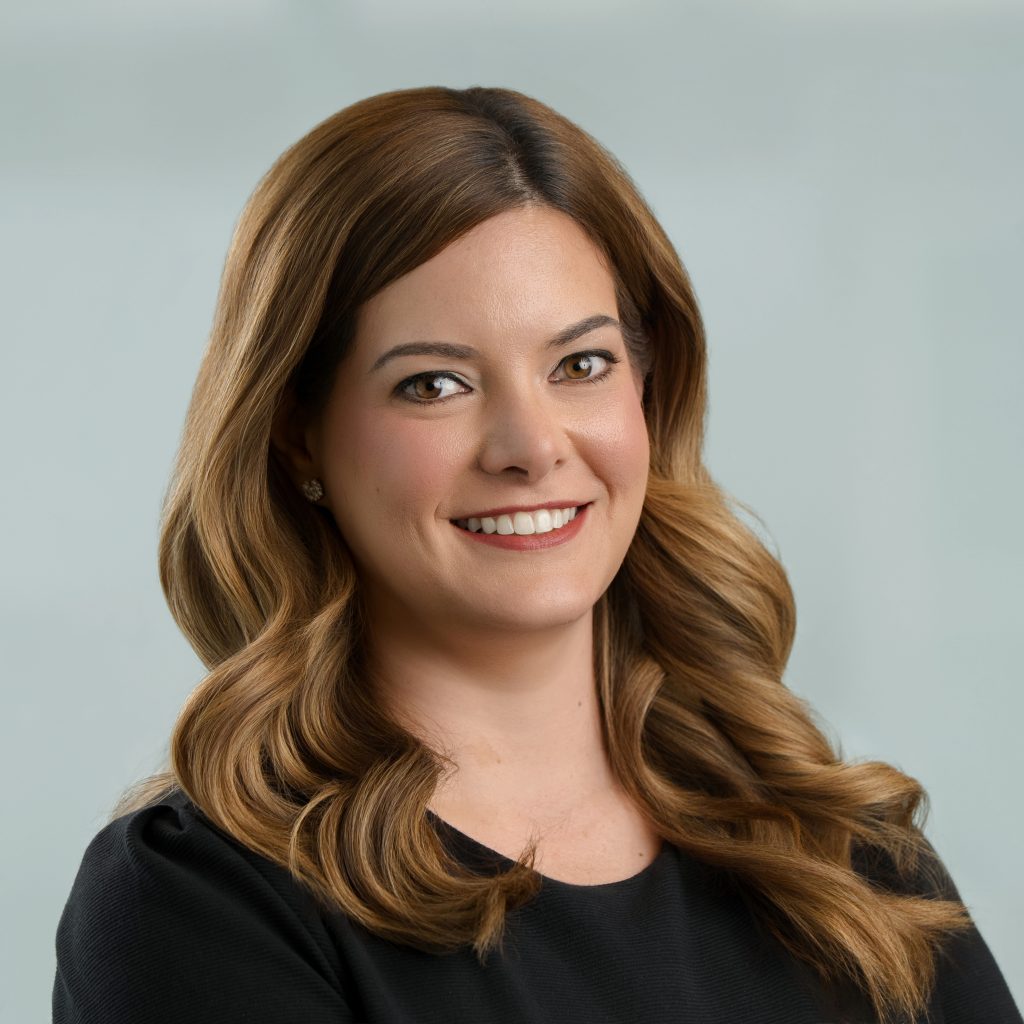
Article by Juan Carlos Morris – Interview with Mariela de la Guardia Oteiza for LexLatin
There are people who wait for the perfect moment before taking action. Mariela de la Guardia Oteiza is not one of them. She graduated from her master’s program at Northwestern University on May 15th, and on May 16th she was already back at her desk. That rhythm says it all: in more than fifteen years of professional practice in Panama, she never waited for doors to be opened for her—instead, she found ways to already be inside while others were still waiting their turn.
Today, she is a partner at Icaza, González-Ruiz & Alemán, one of the country’s most prestigious law firms; a regional reference in commercial law and intellectual property; and President of the American Chamber of Commerce and Industries of Panama (AmCham Panama), the organization that bridges the relationship between Panamanian businesses and the region’s most important commercial partner, the United States.
But what makes de la Guardia most interesting is not what she has accumulated, but what she has understood: that being an expert in one field is not enough if you cannot see the client’s business as a whole; that female leadership is not an abstract concept, but something that is affirmed—or denied—in meetings, hallways, and in the way someone looks at you when you walk into a room; and that Panama, with all its stability and privileged geography, has a window of opportunity that will not remain open forever. This is a conversation about career, leadership, and commitment to the country.
LexLatin: You have more than fifteen years of experience in Panama, a consolidated practice in commercial law and intellectual property, and you have just assumed the presidency of the Board of Directors of the American Chamber of Commerce and Industries of Panama (AmCham). How would you describe that journey, from the beginning to today, in your own words?
Mariela de la Guardia Oteiza: It all started very early. I graduated young from law school, entered a master’s program in Chicago at twenty-one, and the day after graduating—on May 16, 2009—I was already working. It’s not an exaggeration: literally the next day. That master’s program was decisive, not only because of the knowledge, but because of the perspective it gave me. We were an incredibly diverse group, from all over the world, and that opened up a way of seeing law, business, and life that I wouldn’t have gained otherwise.
Before social media, traveling and studying abroad was the only real way to understand different realities, and I made the most of every moment.
When I returned to Panama, I joined the firm and started in the intellectual property department, which fascinated me from the beginning. I worked on everything from services and consumer products to software, launch campaigns, and commercial strategies. You truly understood the client’s business from the inside—what worried each sector, how they thought. At one point, the firm told me that if I wanted to grow, I needed to see other practice areas and not remain only in IP. I listened, made the transition, but never left the field. To this day, I remain a partner in the trademarks department and am active in INTA and all Panamanian intellectual property organizations.
Over time, I incorporated more commercial and corporate work, especially everything related to attracting foreign companies to Panama. When a multinational arrives, it needs guidance on multiple fronts at once: corporate structuring, permits, immigration, labor, and tax matters. I became that first point of contact, working alongside the firm’s specialized teams to provide an integrated service.
Panama also has the Multinational Headquarters Law, which offers significant benefits both for companies and their senior executives, creating a very specific demand for legal services that I have developed over the years.
And how did you reach the presidency of AmCham Panama?
It was a gradual process that began around 2015, when several senior partners at the firm, who were active in business chambers and organizations, told us it was time for the next generation to take on those leadership roles. I became involved with the American Chamber of Commerce, first through the legislation and taxation committee, and gradually took on more responsibilities.
Eventually, I was asked to run for the board of directors. I was elected by the chamber’s members and have served on the board for seven years, holding the positions of secretary and vice president. There was even a year when, due to the mandatory pause between terms, the president at the time asked me to remain as an advisor. When I was later re-elected to the board, there was already a clear consensus: it was time for me to assume the presidency.
At first, I’ll admit I hesitated, and my age was one of the reasons. When you start early, there is always someone who says they prefer someone with more experience—or more gray hair. Over time, however, I learned that a career is not measured in years, but in what you have done with them. What gave me confidence was the example set by the women who came before me, starting with my mentor and the six women who had previously served as presidents of the chamber. They showed me that it was possible—and that I was ready.
You’ve mentioned that age was always a factor you had to deal with. How did you manage to be valued for your merits in environments where experience is measured in gray hair?
What gave me confidence was always knowledge. A close friend once told me very directly: you are not afraid to speak in front of people at the highest level. And she was right. When you know what you’re talking about, age stops being the central issue. I’m not the only one who has experienced this—my cousin was president of AmCham Panama at thirty-five, and other Millennials have since assumed leadership positions in similar organizations. Merit eventually finds its way, even if it takes longer at first.
I experienced this very clearly when I was preparing for my inauguration as president of AmCham. I was extremely nervous. But when I arrived at the event, there wasn’t a single person who didn’t tell me I deserved it. The Vice Minister of Trade and Industry herself, who has known me for years through our joint work, said it in her speech: there is no one more qualified for this position than you; from the day I met you, you have breathed AmCham. In that moment, you realize that what was a doubt for you was obvious to everyone else.
Let’s talk about female leadership from the inside. What attributes do you feel you bring as a leader that might not be found in more traditional leadership styles?
I place great emphasis on the human factor. I genuinely care about the people on my team—about what they’re going through and what they need. If someone is dealing with a health issue or a family difficulty, I feel I need to know. Not because it’s a job requirement, but because I believe teams perform better when people feel that someone truly cares about them.
People have come to me and said, “Mariela, I don’t have anyone else to tell this to—I’m telling you.” For me, that means everything. It shows trust, and trust is the foundation of any team that aims to perform well.
That said, female leadership also faces resistance that male leadership does not. Just last week, I experienced something that illustrates this perfectly: a client arrived at the firm and chose to direct their attention to someone else instead of me, even though I was the subject-matter expert. These situations still happen, and they are one of the reasons many women ultimately leave law firms. This is not a minor or anecdotal issue.
What advice would you give to the Mariela who started her career the day after graduating in Chicago, so she could better face these challenges?
To trust earlier in what she knows. There is knowledge you accumulate without realizing it—implicitly—and it takes time to recognize it as your own. That knowledge is what sustains you when you have to stand in front of someone important and defend a position. Hard work and constant preparation are what allow you to be there. I prepared my whole life for that moment, even if I didn’t know it at the time.
You mentioned that at one point you were asked to leave your area of expertise to learn other practices. What was that experience of stepping outside your comfort zone like?
It was uncomfortable—I won’t lie. In the intellectual property department, I was a machine: I knew exactly what I was doing, I did it well, and I felt confident. Leaving that space meant dusting off my university notebooks, studying new subjects, meeting new people, and reviewing areas I didn’t fully master. At first, it was messy.
But over time, I understood the value of that decision. When a client came to me wanting to establish a presence in Panama, I could guide them through the entire process: corporate setup, permits, sanitary registrations, and then direct them to my colleagues who were experts in immigration and labor matters. Interdisciplinarity is no longer optional—it’s a necessity.
You’ve also become involved in data protection and, more recently, artificial intelligence. How did that come about?
That path led me into data protection. When Panama began discussing its data protection law, I got involved from the start: I studied the regulation, spoke with the supervisory authority, and participated in monthly technical forums analyzing what was happening across the region.
Now that artificial intelligence has arrived, I already had that background, which allowed me to contribute to a multisectoral ethical guide we developed last year. The initiative was led by Niurka Montero, President of AmCham 2025, with participation from both the public and private sectors. It is not a code; it is a practical and visual guide on the ethical values that should govern the use of artificial intelligence. This kind of work is only possible if you don’t lock yourself into a single area of practice.
How do you see the future of the legal profession in this context of accelerated change?
The lawyer who prepares themselves will be able to move forward. The one who decides they have learned enough will not. I was born in 1986—I used a typewriter, I used encyclopedias, I wrote papers by hand. And when the internet arrived at the end of elementary school, I embraced it. That’s how it must be with every new tool.
Artificial intelligence will not replace lawyers, but it will replace lawyers who don’t know how to use it. What concerns me is allowing that tool to make decisions that belong to human judgment: in a shareholders’ meeting, in a legal case, in a complex negotiation. That is where the experienced lawyer, with judgment and criteria, remains irreplaceable. But that lawyer must be prepared—to feed the tool, to challenge it, and to know when not to use it.
To close: how do you see Panama’s prospects in such an uncertain geopolitical environment?
Panama has a blessing we sometimes fail to fully appreciate: real political stability, alternation of power, and a geographic position that makes us a communications, logistics, and business hub for the entire continent. Cultures, religions, and ethnicities from all over the world coexist here without conflict, enriching us in ways that go far beyond economics.
Since the 1980s and 1990s, we haven’t had a political candidate who seriously threatened our institutional framework, and that gives foreign investors tremendous confidence.
The international environment is challenging—I won’t deny it. We have a Trade Promotion Agreement with the United States that is under pressure, and tariff issues naturally affect certain sectors. But the current government has a very open attitude toward dialogue. When I speak with public officials, they ask me where the bottlenecks are, what obstacles are slowing down investment.
That attitude, combined with everything Panama offers structurally, makes me optimistic. The challenges are real, but the foundations are solid.