




Icaza Advises PANAFIN on Corporate Bond Issuance
05/10/2026
Panama Removed from the EU Tax Blacklist
12/10/2026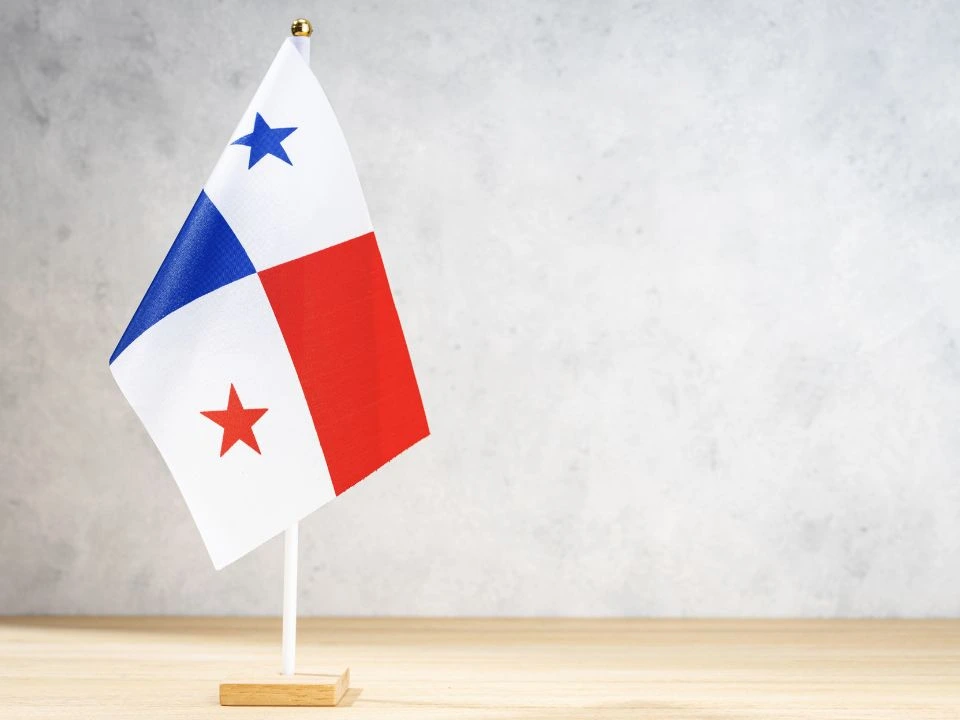
Panama’s Law 526: What Changes Under the New Economic Substance Rules and the 15% Tax


By: Mariano Oteiza Díaz and Benito Lucero for Lex Latin
Law 526 Introduces Economic Substance Requirements for Certain Panamanian Entities Linked to Multinational Groups; the Regime Conditions the Tax Treatment of Foreign Passive Income on Carrying Out Substantive Activities in the Country
The Republic of Panama has taken a decisive step in modernizing its financial and tax ecosystem through the enactment of Law 526 of May 28, 2026, regulated by Executive Decree 32 of September 2026. This legislation introduces, for the first time, economic substance requirements for a specific group of entities defined by the law, an international standard driven by the European Union and the OECD to combat the artificial shifting of profits.
Contrary to what many feared, the law does not eliminate Panama’s historic territorial income regime or create a new tax. Instead, it conditions the tax exemption for foreign-source passive income (such as dividends, interest, royalties, and capital gains) on the performance of real activities within national territory. It is important to note that this law does not apply to all companies, but focuses exclusively on Panamanian entities that are part of a multinational group.
What are the advantages, disadvantages, impact on the country, and comparative tax scheme against other jurisdictions?
Advantages of the New Regime
- Removal from discriminatory lists: for the Panamanian State, the greatest benefit is definitive alignment with international tax transparency standards. This facilitates the country’s removal from the European Union’s gray and black lists, strengthening the reputation of Panama’s international financial center.
- Attraction of quality corporate investment: multinationals seeking to operate transparently will find in Panama a jurisdiction with greater legal certainty. By requiring economic substance (offices, qualified personnel, local decision-making), the country promotes the creation of high-value jobs and stimulates the domestic economy through office leasing and local professional services.
- Flexibility in outsourcing: companies benefit from a flexible law: the regulation allows human resources and infrastructure requirements to be outsourced in Panama through qualified local providers, provided that control of operations remains with the entity. However, strategic decisions and risk support are functions that cannot be subcontracted.
Disadvantages and Challenges of the Economic Substance Law
- Increased operating costs: for corporations considered multinational groups under the law’s definition, which previously used Panamanian companies purely as paper legal vehicles to safeguard passive income assets abroad, the new law makes their structure more expensive. They must now allocate financial resources to establish a physical presence or operate through qualified local agents.
- Administrative complexity and increased oversight: companies must file strict substance declarations and submit to supervision by the Ministry of Economy and Finance (MEF). This adds a bureaucratic and accounting burden that did not exist under the traditional cross-border scheme.
How Does This Change Benefit Panama?
The country is transformed from an offshore center, in which its vehicles lacked substance, into a hub of real operations and value. The local economy is directly energized by the need for professionals in law, accounting, administration, and technology to meet the demand for substance required by international groups.
For companies, the benefit lies in mitigating global reputational and tax risk: operating under a Panamanian company that meets economic substance standards prevents the authorities of parent companies (in Europe or North America) from questioning the legality of the structure or applying severe tax withholdings under International Tax Transparency rules (CFC Rules).
Panama vs. Other Jurisdictions: Comparative Analysis of Tax Payable
Law 526 of 2026 establishes that if a qualified entity (that is, one that falls within the scope of the law) fails to demonstrate economic substance in the country, it will lose the territorial exemption on those flows and will be subject to an exceptional 15% rate on the net income from its foreign passive income.
Looking at the global corporate tax landscape for this type of income, Panama’s 15% rate remains highly competitive:
| Jurisdiction | Rate on Foreign Passive Income (without substance) | Remarks |
| Panama | 15% | Maintains 0% if real substance is demonstrated or if the entity does not belong to a multinational group. |
| United States | 21% | Fixed federal corporate tax rate, plus additional state taxes. |
| Mexico | 30% | General corporate regime applied to worldwide income. |
| Spain | 25% | General corporate rate, with strict limits on exemption if there is no substance. |
| Colombia | 35% | One of the highest corporate rates in the Latin American region. |
Even in the worst-case scenario (non-compliance and application of the 15% rate), Panama matches the global minimum tax promoted by the OECD/G20 Inclusive Framework, preventing capital returns from suffering stifling rates such as those of other countries in the region.
What Is the Impact of Panama’s Economic Substance Law?
The Economic Substance Law marks the end of an era for empty corporate structures, but opens the door to a stage of sophisticated competitiveness for Panama. With its entry into force for fiscal year 2027, both the government and Panamanian professional firms have the ideal window to consolidate infrastructure that helps multinationals transition toward transparency, ensuring that the isthmus remains the logistical and financial heart of the Americas.