




First Case of Sanitary Registration Nullification in Panama
06/08/2026
Outsourced Accounting: How to Comply with Law 526 in Panama
13/08/2026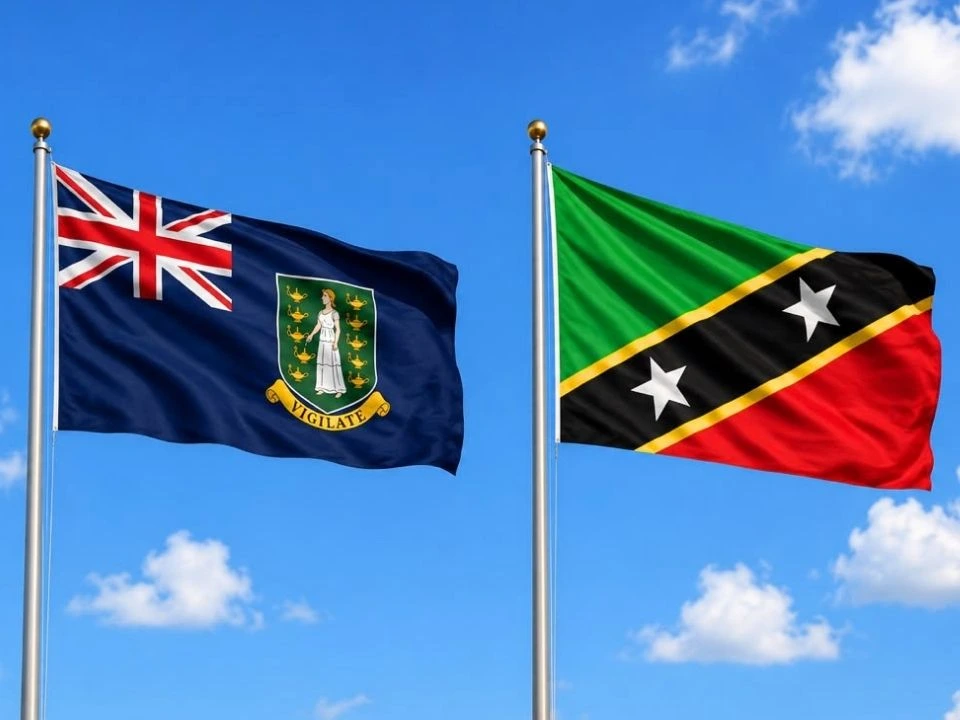
Two islands, one goal. Protecting what you built.

By: Estefanía Alemán – Partner
Wealth that has taken a lifetime to build deserves careful stewardship and thoughtful legal protection. Offshore trusts, when properly structured, remain among the most recognised instruments available for this purpose, enabling families to preserve assets across generations, provide for their loved ones, and make sure the plans they put in place today are honoured well into the future. This article looks at how two leading jurisdictions, the British Virgin Islands and Nevis, approach that goal, and what each offers individuals and families seeking lasting, lawfully grounded protection for their wealth.
I · THE MECHANISM
Why a trust is an asset protection instrument
A trust is a legal relationship grounded in centuries of common law: the settlor transfers assets to a trustee, who holds and manages them for the benefit of designated beneficiaries, according to the terms set out in the trust deed. That separation of legal ownership from beneficial enjoyment is what gives a trust its protective character. Once properly settled, the assets belong to the trust, not to the settlor personally, and are administered according to the rules the settlor has put in place.
Both the BVI and Nevis operate within internationally recognised frameworks of regulatory compliance, anti-money laundering standards, and international tax cooperation. The protection a well-structured trust provides is grounded entirely in the rule of law: it reflects the long-standing, legitimate right of individuals to organise their affairs prudently, provide for their families, and pass on their wealth across generations. How each jurisdiction frames and reinforces that protection is where the two diverge.
BRITISH VIRGIN ISLANDS
Trustee Act and firewall legislation Rooted in English common law; supplemented by the Trustee Act (as amended through 2021) and express statutory firewall provisions. A mature, globally recognised framework applied by well-resourced courts.
NEVIS
Nevis International Exempt Trust Ordinance (NIETO) Enacted 1994; strengthened by 2015 amendments. Modelled after the Cook Islands framework, with dedicated statutory provisions designed to reinforce the durability of trust structures against challenge.
1 · BRITISH VIRGIN ISLANDS
The BVI framework: a mature legal system with express firewall protections
The BVI offers a trust framework built on the depth and reliability of its legal infrastructure. Its courts are experienced, its practitioners highly specialised, and its statute book has been developed over decades to meet the real-world needs of international settlors.
Firewall against foreign law and forced heirship. The BVI Trustee Act contains express firewall provisions that shield a BVI trust from attack on the basis of foreign legislation. Claims grounded in foreign forced heirship rules, matrimonial rights, or civil partnership laws are specifically excluded as grounds on which a BVI trust can be invalidated. Foreign judgments arising from such claims are contrary to BVI public policy and will not be recognised or enforced by BVI courts. All questions of trust validity and administration are determined exclusively under BVI law, regardless of any attempt to apply the law of the settlor’s home country.
Enforcing a foreign judgment in the BVI. Outside the forced heirship and matrimonial firewall, the BVI takes a pro-enforcement approach to foreign judgments: its courts are generally receptive to recognising and enforcing them. The procedure depends on the judgment’s origin. Judgments from jurisdictions covered by the Reciprocal Enforcement of Judgments Act 1922, including England and Wales, Scotland, Northern Ireland, and a number of Commonwealth and Caribbean countries, may be registered directly in the BVI without re-examination of the underlying merits, provided the application is made within twelve months of the original judgment. For judgments from countries outside that Act, including, notably, the United States, the creditor must commence fresh proceedings in the BVI courts and re-litigate from the beginning. In all cases, the BVI court will refuse to register or enforce a judgment obtained by fraud, contrary to public policy, or where the original court lacked proper jurisdiction.
Burden of proof and standard of proof. The BVI applies the standard civil burden and standard of proof to all creditor claims, including those alleging that a transfer into a trust was made to defeat creditors. The creditor bears the burden of proving their case on the balance of probabilities: it is more likely than not that the transfer was made with fraudulent intent. There is no special statutory provision under BVI trust law that modifies or raises this standard. The same civil standard applies in matrimonial proceedings.
Statute of limitations. There is no specific statutory limitation period under BVI trust law within which a creditor must bring a claim to set aside a transfer into a trust. The Statute of Elizabeth, as reflected in BVI’s Conveyancing and Law of Property Act, remains applicable, meaning a creditor challenging a transfer on fraudulent conveyance grounds is not subject to a defined cut-off period specific to trust transfers. General civil limitation periods under the Limitation Act 1961 apply to other claims (six years for contract and tort, twelve years for claims under deed), but these do not create a bespoke trust-specific limitation window.
Registration and public filings. A BVI trust is not required to be registered or filed with any public authority. The BVI Financial Services Commission has confirmed expressly that public filing and registration of trust details is not required by BVI law. No public registry of trusts exists. The trust deed is a private document; no details of the settlor, beneficiaries, assets, or trust terms are publicly accessible. Trust information may only be disclosed by order of a BVI court. The only regulated element is the trustee: companies providing trustee services must be licensed under the Banks and Trust Companies Act 1990 and supervised by the BVI Financial Services Commission, but this does not result in any public disclosure of trust-specific information.
BVI in context: The BVI’s strength lies in the quality of its legal system, the reliability of its courts, and the express statutory protection against foreign heirship and matrimonial claims. Its civil standard of proof and the absence of a bespoke creditor limitation period for trust transfers reflect its grounding in the English common law tradition: a framework built on judicial sophistication rather than specific legislative shields.
2 · NEVIS
The Nevis framework: statutory shields and defined creditor barriers
Where the BVI’s protections are rooted in the maturity of its common law system, Nevis has taken a more targeted legislative approach. Its trust ordinance contains specific statutory provisions whose purpose is to establish clear, measurable barriers that make it significantly more difficult, and more expensive, for any creditor to reach assets held in a Nevis trust. The NIETO, modelled on the Cook Islands legislation, is recognised as one of the more robust trust frameworks available for this purpose.
Non-recognition of foreign judgments. Nevis does not recognise or enforce judgments from foreign courts against a Nevis trust. A creditor holding a court order from any jurisdiction, including major commercial and financial centres, cannot register or rely upon that judgment in Nevis. They must start an entirely new proceeding before the courts of St. Kitts and Nevis, under Nevis law, and retain local counsel on a non-contingency basis. This is one of the most absolute barriers to creditor enforcement available in any offshore trust jurisdiction.
Mandatory bond requirement. Before a creditor may even initiate proceedings, they must post a bond of USD 100,000 with the Nevis Ministry of Finance. Raised from USD 25,000 by the 2015 amendments, this requirement deters speculative or unfounded claims while preserving the right of any creditor with a genuine case to pursue it.
Burden of proof and standard of proof. The NIETO places the burden of proof expressly on the creditor and sets the applicable standard at beyond a reasonable doubt: the highest standard in the common law world, ordinarily reserved for criminal prosecutions. A creditor alleging fraudulent intent must meet that criminal standard, a substantially higher bar than the civil balance of probabilities applied in the BVI and in most other trust jurisdictions worldwide.
Statute of limitations. Nevis has a specific, defined limitation period. No challenge can be brought if the trust has been in place for more than two years from the date the creditor’s cause of action accrued. Even within that two-year window, proceedings must be commenced within one year of the actual date of the transfer. Once these periods expire, the structure is legally unassailable on fraudulent conveyance grounds, a clear and quantifiable protection with no equivalent in BVI trust law.
No asset freezing orders. Nevis law does not permit injunctions or Mareva-style freezing orders against trust assets. The 2015 amendments added an automatic removal mechanism: if a trustee or protector becomes subject to a foreign court order compelling them to act against the trust, they are automatically removed and a successor is appointed. The trust continues undisturbed.
Registration and public filings. The trust deed is private and not filed publicly. The only requirement is submitting Form T-1 with the Nevis Registrar within thirty days of execution, recording only the trust’s name, registered office, and trustee identity. Beneficiary information, asset details, and the substantive terms all remain confidential. All non-criminal judicial proceedings involving a Nevis trust are conducted in private, and the Nevis Confidential Relationships Act makes unauthorised disclosure a criminal offence.
Nevis in context: The NIETO’s protections are specific and quantifiable: a criminal standard of proof, a defined two-year limitation period, a mandatory bond, absolute non-recognition of foreign judgments, and a prohibition on freezing orders, all within a single legislative framework purpose-built for trust durability.
II · SIDE BY SIDE
| Feature | BVI | Nevis | ||
| Firewall: heirship and matrimonial claims | Express statutory firewall; such foreign judgments refused by BVI courts | Yes | Excluded under NIETO | Yes |
| General foreign judgment enforcement | Pro-enforcement: treaty country judgments registerable within 12 months; others require fresh BVI proceedings | Pro-enforcement | No foreign judgment of any kind recognised or enforceable | Absolute bar |
| Creditor bond before proceedings | None required | None | USD 100,000 to Ministry of Finance | USD 100,000 |
| Standard of proof: fraudulent transfer | Balance of probabilities (civil) | Civil | Beyond reasonable doubt (criminal) | Criminal |
| Burden of proof | Creditor bears burden; no special statutory provision | Creditor (civil) | Expressly placed on creditor by statute | Creditor (statute) |
| Limitation period for trust transfer claims | No specific period; Statute of Elizabeth applies | None specific | 2 years from cause of action; 1 year from date of transfer | 2 / 1 years |
| Freezing / Mareva injunctions | BVI courts may issue in appropriate cases | Possible | Expressly prohibited; automatic trustee removal on foreign order | Prohibited |
| Trust registration and public filing | No registration or public filing required | None required | Form T-1 only (name, trustee, office); trust deed and beneficiaries remain private | Minimal |
| Confidentiality of proceedings | Strong; no public registry; disclosure by court order only | Strong | All trust proceedings in private; criminal penalties for unauthorised disclosure | Very strong |
III · CHOOSING A JURISDICTION
Two philosophies, both effective
“The right jurisdiction is not the one with the longest list of protections; it is the one whose protections align most precisely with the nature of the risks a particular settlor faces.”
The BVI and Nevis reflect two legitimate and internationally respected approaches to the same underlying goal: preserving wealth and ensuring that a settlor’s carefully considered plans endure. Both operate within recognised international standards for regulatory compliance, transparency, and anti-money laundering obligations. What distinguishes them is the architecture of their legal protections.
The BVI is the natural choice for settlors who value a sophisticated, well-litigated legal system grounded in English common law: one with express statutory firewalls against foreign heirship and matrimonial claims, deep professional expertise, and courts whose decisions ultimately reach the Privy Council in London.
Nevis, drawing on the Cook Islands tradition, offers protections that are more precisely targeted: a criminal standard of proof, a defined and short limitation period, an absolute bar on foreign judgment recognition, a mandatory bond, and a statutory prohibition on freezing orders. For settlors whose main concern is potential exposure to civil litigation, these provisions offer a clear, well-defined framework of protection.
The choice between jurisdictions, and in many cases the decision to use both in combination, should always be made with the guidance of experienced trust counsel, taking into account the settlor’s domicile, the nature and location of assets, and the specific goals of the structure. Our team is available to guide you through the right approach for your circumstances.
Would you like to learn more about how this structure can protect your wealth? Reach out to us at bd@icazalaw.com.