



Economic Substance in Panama: Requirements and 2027 Deadline
28/07/2026
BVI vs Nevis Asset Protection Trust Comparison
10/08/2026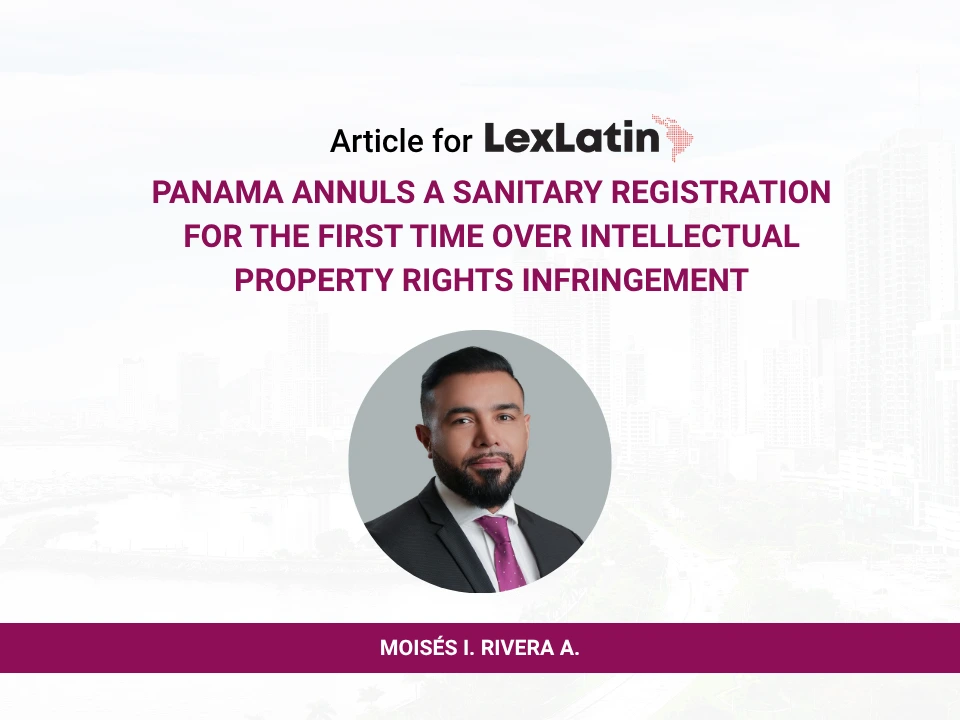
Panama Annuls Sanitary Registration for IP Violation

By: Moisés Iván Rivera for Lex Latin
Obtaining sanitary registrations for products that reproduce or imitate registered trademarks poses new challenges for companies. A recent judicial precedent opens a new avenue in the country.
The rapid evolution of regional and global markets has given rise to new and sophisticated forms of improper trademark exploitation. Among them, a practice that has gained particular relevance in Panama: obtaining sanitary registrations for products that reproduce or are confusingly similar to previously registered trademarks, with the evident purpose of capitalizing on the prestige and recognition that their legitimate owners have built over the years.
This practice is not the product of chance or mere oversight. It is a deliberate exploitation that violates industrial property rights and undermines the legitimate effort of companies that devote resources to positioning their brands in the market.
Panama’s geographic position is highly significant for international trade, given that the Panama Canal is one of the continent’s most important international shipping routes. That condition has also fueled an increase in trademark counterfeiting and/or imitation. In fact, sanitary registrations for products that infringe trademarks increasingly pass through national territory, making Panama a decisive and valuable market for brand protection.
Our firm recently obtained the first ruling nullifying and canceling a sanitary registration for a mass-consumption product issued in the Republic of Panama, based on the violation of industrial property rights.
This outcome was achieved through the design of an innovative legal strategy, presented before the courts specializing in Intellectual Property, and it opens a previously unexplored avenue of protection for trademark owners in our country.
This judicial milestone represents a significant step in the development of industrial property in Panama: it reflects that Panama’s legal system offers broader tools than are commonly known for defending intangible assets, provided they are identified and applied by lawyers with deep knowledge of trademark law and their clients’ business realities.
In turn, the precedent shows that the defense of industrial property rights is not limited to traditional administrative channels. A strategic and innovative interpretation of the legal framework can expand the tools available to protect trademarks against new forms of infringement and respond to the challenges posed by the evolution of trade and markets.